Homemade Rice Cereal for Babies: Complementary Feeding in BTM Layout
A Simple, Healthy Start to Complementary Feeding
Starting complementary feeding around 6 months is an important milestone for every baby. Homemade rice cereal is a simple, affordable and easy-to-digest option that can be introduced as one of the first complementary foods. It can also be gradually adapted to the baby’s changing feeding skills.
How to Make Homemade Rice Cereal
Ingredients
• 1 cup rice
• Water as required
Method
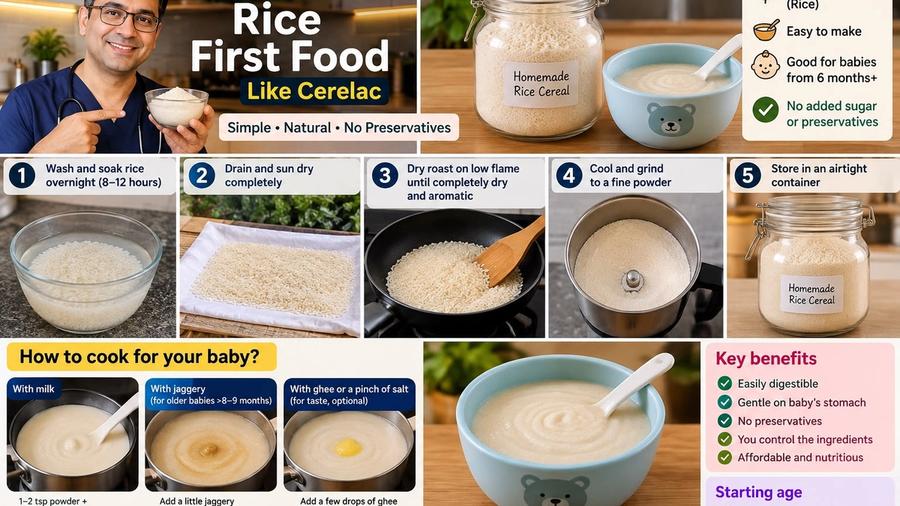
• Wash the rice thoroughly and soak it for 8–12 hours.
• Drain and dry it completely in a clean place.
• Dry-roast the rice on a low flame until it becomes aromatic, without burning it.
• Cool completely and grind into a fine powder.
• Store in a clean, dry, airtight container and prepare small batches to maintain freshness.
How to Give It
Take 1–2 teaspoons of the rice powder and cook it well with water until you get a smooth, soft porridge. As the baby grows, gradually increase the quantity and texture according to appetite and feeding ability.
Breastfeeding should continue on demand, and breast milk or appropriately prepared formula remains an important source of nutrition during infancy. Breast milk or formula can be mixed into the cooked cereal after it has cooled to a suitable temperature.
Can We Add Ghee, Jaggery or Salt?
A small amount of ghee can be added for energy and taste. A little jaggery or salt may occasionally be used for taste, particularly as the baby gradually moves towards eating family foods. However, these are not nutritionally essential, and excessive sugar and salt should be avoided.
A practical approach is to cook the family’s food with mild seasoning, take out the baby’s portion, and then add more salt, jaggery or spices to the remaining family food. This makes complementary feeding easier and helps the baby gradually enjoy the same healthy foods eaten by the family.
Don’t Stop at Rice!
Rice cereal is only a starting point. As complementary feeding progresses, introduce a variety of cereals, millets, dal, pulses, vegetables, fruits, nut/seed pastes, paneer/curd and other iron- and protein-rich foods in age-appropriate forms.
The goal is not to prepare a completely separate menu for the baby. The goal is to gradually introduce the baby to a varied, nutritious family diet with appropriate texture and portion size.
The Take-Home Message
Homemade • Simple • Affordable • Family-friendly
Start simple, introduce variety, respect the baby’s appetite and gradually move towards healthy family foods.
“The best baby food is not always a special food—it is healthy family food, prepared safely and offered in the right form.”
If you need guidance on starting complementary feeding, your baby’s appetite, texture progression, or a varied family diet, book a consultation at Ketaki Kids Care or contact us on WhatsApp.